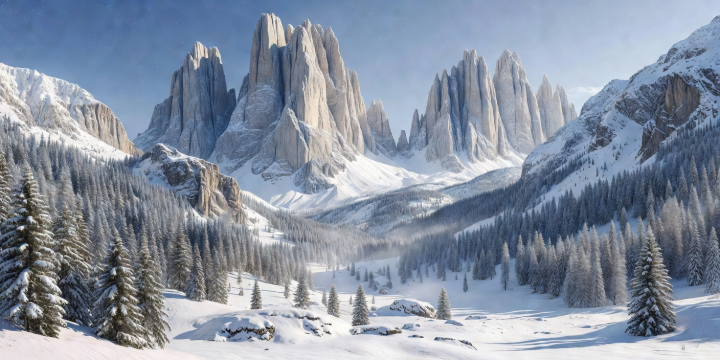
Geomorphology and Solar Insolation
The Dolomites are characterized by vertical limestone and dolomite towers rising abruptly from gentle subalpine meadows (alps). This sharp topography creates dramatic variations in solar exposure. Valleys with north-south orientations (such as Val Gardena and Val Badia) experience short direct sunlight hours in winter, keeping valley floors cold and snow consistent.
Conversely, broad south-facing terraces (such as the Alpe di Siusi plateau) receive high solar insolation. Midday solar heating can soften south-facing slopes while shadowed cirques metres away remain hard-packed and frozen. Weather patterns are influenced by southerly depressions over the Gulf of Genoa that produce substantial snowfall, contrasting with drier northerly föhn conditions that clear the skies.
Inter-Valley Cable Mobility and Pass Network
Mobility across the Dolomites relies on a coordinated multi-modal transport network linking isolated valley communities:
- Interconnected Cable Lift Systems: The Dolomiti Superski infrastructure links dozens of separate valleys via interconnected cable cars, funiculars, and chairlifts. This aerial network allows movement across mountain divides without requiring ground vehicle travel over elevated passes.
- Mountain Pass Corridors: High alpine passes—including Passo Gardena, Passo Sella, Passo Pordoi, and Passo Campolongo—connect the core valleys. These roads are subject to swift closures during snowstorms, making winter tyre equipment or carried tyre chains a legal mandate from November to April.
- Rail Arterials: The Brenner Railway corridor along the Adige and Isarco valleys provides direct links from Innsbruck and Verona, interfacing with regional bus routes at Bolzano and Bressanone stations.
Trade-offs: Central Alps vs Southern Carbonate Ranges
Evaluating the Dolomites against the western Swiss or French Alps reveals key operational differences:
Base Elevations vs Snowmaking Infrastructure: The Dolomites feature slightly lower average valley elevations than high French alpine resorts. To counteract seasonal fluctuations in natural snowfall, the region has developed Europe's most extensive automated snowmaking system, supported by high-capacity reservoir lakes built into the limestone basins.
Culinary and Lodging Dispersion: Accommodation in the Dolomites is distributed among historic farming hamlets and Ladin cultural settlements rather than high-density purpose-built concrete stations. This offers superior shelter and culinary stability, but necessitates transit planning when moving between distinct valley basins.
Planning Considerations
Operational logistics in the Dolomites require attention to regional requirements:
- Pass Status Monitoring: Real-time road status boards at valley entrances indicate pass accessibility; detours around closed passes require multi-hour diversions via valley highways.
- Lift Operating Timetables: Crossing multiple valleys via cable networks requires precise departure scheduling; missing a return lift connection strands travellers in adjacent valleys, requiring long taxi circuits.
- Language Demarcation: Municipalities maintain trilingual designations (Italian, German, and Ladin); signage and schedules shift terminology between Val Gardena (Gröden) and Cortina d'Ampezzo.