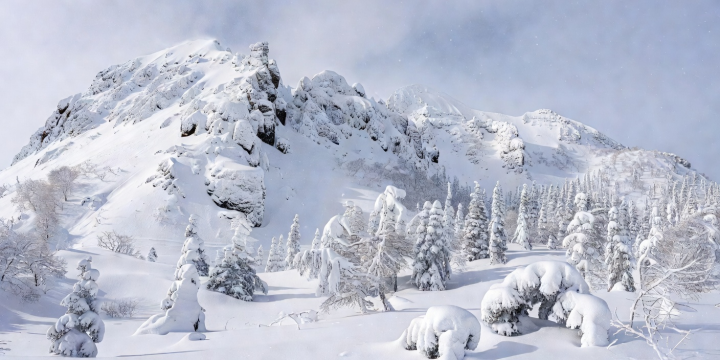
Meteorological Drivers: The Siberian High and Sea of Japan
Hokkaido's winter climate is governed by the Siberian High pressure system pushing frigid, dry continental air masses eastwards. As this air crosses the comparatively warmer waters of the Sea of Japan, it absorbs substantial moisture and sensible heat, forming convective snow cloud bands.
Upon encountering the mountain spine of western Hokkaido—most notably the Shiribeshi and Ishikari ranges—the air is forced upwards. This orographic lifting results in intense, continuous snowfall of exceptionally low water content, typically yielding powder snow with density metrics far below European alpine norms. Temperatures remain steadily below freezing from December through March, preventing midday melting and preserving structural snow quality.
Infrastructure Resilience and Rail Logistics
The prefecture maintains rigorous winter operational protocols developed through decades of high-volume snow management:
- Heavy Rail Maintenance: JR Hokkaido operates specialized rotary snowploughs and jet blowers along mainline tracks. The Hakodate Main Line and Chitose Line handle continuous traffic, though secondary regional spurs can face curtailment during whiteout blizzard events.
- Aviation Redundancy: New Chitose Airport operates dual independent runways equipped with mechanical sweeping teams working in synchronised echelons. While flight holds occur during peak frontal passages, total airport shutdowns remain comparatively rare.
- Roadway Heating and Markers: Highway overpasses and urban intersections frequently feature underground geothermal or electrical heat pipes to eliminate sheet ice. Rural routes utilize overhead LED arrow indicators (yahazu) pointing downward to demarcate road edges during whiteout conditions.
Regional Comparison: Western Slopes vs Eastern Plains
Hokkaido exhibits pronounced internal regional variation:
Western Slopes (Niseko, Otaru, Sapporo): Bear the full impact of the sea-effect snow machine. Snow depths accumulate rapidly, providing deep coverage but limiting visibility and sunshine hours. Transit between mountain resorts and urban centres relies heavily on specialized highway express coaches.
Eastern Plains (Tokachi, Kushiro): Shielded by central mountain massifs, the eastern region experiences the "Tokachi Hare"—prolonged stretches of clear, dry, sunny skies paired with significantly lower ambient temperatures. Snowpack is markedly shallower, but sub-zero air temps frequently plunge below minus twenty degrees Celsius, demanding rigorous vehicle block heating and building insulation standards.
Operational Planning Factors
Travellers structuring logistics across Hokkaido should monitor specific operational factors:
- Vehicle Rental Regulations: Winter rentals uniformly feature studless winter tyres and all-wheel-drive configurations. Rear-wheel-drive vehicles are not deployed commercially in winter due to traction limitations.
- Onsen and Energy Systems: Municipal heating in volcanic districts draws heavily from geothermal tap networks, providing reliable domestic heating during municipal grid disruptions.
- Baggage Forwarding Integration: Japan's national logistics networks (Takkyubin) allow ski equipment and heavy luggage to bypass passenger rail cars, transporting gear directly between airports and mountain chalets.