Atmospheric Mechanics and Daylight Architecture
The primary environmental determinant in Tromsø is its maritime Arctic climate. Despite its position well above the Arctic Circle, coastal water temperatures remain above freezing due to the North Atlantic Current. Consequently, shoreline winter temperatures are notably higher than continental locations at comparable latitudes, such as Siberia or interior Alaska.
Daylight follows the polar night cycle between late November and mid-January, during which the solar disk does not rise above the geometric horizon. Illumination during this period is limited to civil twilight, producing soft, blue-spectrum ambient light for several hours around midday. While direct solar heat is absent, the maritime layer creates frequent cloud cover, reducing radiative heat loss from the ground but complicating optical aurora observations.
Navigating these conditions requires contingency planning. Clear sky conditions often occur inland toward the Finnish border, away from the coastal maritime front, necessitating mobile reconnaissance along the E8 highway corridor across varied microclimatic zones.
Transit Systems and Island Settlement Geography
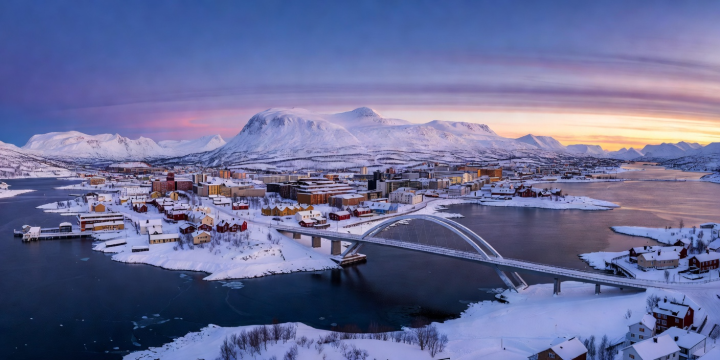
The urban centre occupies Tromsøya, an island situated in a strait between the mainland and the larger island of Kvaløya. This topography has shaped municipal engineering, featuring extensive sub-surface infrastructure designed to maintain mobility under severe snowfall.
Key transit components include:
- Sub-surface Tunnel Network: The Sentrumstangenten tunnel system runs beneath the island's central spine, incorporating underground roundabouts and parking caverns excavated directly into bedrock. This keeps urban traffic flowing independent of surface snow accumulation.
- Bridge Corridors: The Tromsø Bridge (Tromsøbrua) and Sandnessund Bridge connect the central island to suburban and mainland districts. High crosswinds through the sound can trigger temporary operational warnings for high-sided transport.
- Regional Air Links: Tromsø Airport at Langnes operates year-round with specialised de-icing facilities and precision approach systems, maintaining high schedule reliability despite coastal snow squalls.
- Coastal Ferry Terminals: Hurtigruten and Havila coastal express vessels call daily, providing heavy freight and passenger links along the Norwegian littoral without road dependencies.
Trade-offs: Maritime vs Continental Northern Destinations
Selecting Tromsø over interior subarctic locations involves defined logistical trade-offs:
Thermal Comfort vs Snow Consistency: The maritime moderation means surface temperatures frequently hover near zero degrees Celsius. This creates cycles of wet precipitation followed by refreezing, leading to glaze ice on pedestrian and vehicle corridors. Spikes and studded footwear are mandatory municipal safety gear. Conversely, interior continental locations remain solidly sub-zero, yielding drier snow conditions with less freeze-thaw surface variation.
Urban Density vs Wilderness Access: Tromsø offers comprehensive tertiary services, including university hospital facilities, cold-climate testing laboratories, and extensive culinary infrastructure. However, moving beyond ambient artificial light requires dedicated maritime or vehicular transit through mountain passes that remain subject to avalanche management closures.
Regional Selection Criteria
Travel planners evaluating the region should assess the following parameters:
- Transport Flexibility: Public regional buses (Troms Fylkestrafikk) operate comprehensive island routes, but reaching outer fjords such as Sommarøy or Lyngen requires scheduled ferry coordination.
- Cold Weather Preparedness: Layering strategies must prioritise windproof and waterproof outer shells rather than extreme sub-zero down insulation, due to the high relative humidity of coastal air.
- Lodging Distribution: Mainland accommodations require bridge transit to access core cultural institutions, making island-based lodging more resilient during high-wind transit curtailments.